The Introduction to Ophthalmic Surgery course is organised by the Royal College of Ophthalmologists in London and is aimed at doctors seeking early exposure to microsurgical principles.
Pre-course preparation included online modules via e-Learning for Healthcare, covering ophthalmic instruments, suturing techniques and primary repair of penetrating eye injuries. Alongside a pre-course handbook, this provided a useful foundation in basic surgical principles which then built upon during the course.
My cohort of attendees was notably mixed: foundation doctors, international medical graduates, various trainees in other specialty programmes (including a medical registrar), and veterinary ophthalmologists. This diversity created a reassuring learning environment, and was also a useful reminder that ophthalmology attracts interest from a wider range of backgrounds, often at very different career stages.
Programme structure and simulation-based learning
The day began with a welcome and introduction, followed by demonstrations on knot tying, correct handling of instruments, and suturing principles, before advancing to increasingly complex practical tasks. Each demonstration followed by immediate hands-on application, starting from basic suturing practice on boards, to eyelid laceration repair, scleral and extraocular muscle suturing, and corneal suturing under a microscope. Corneal incision techniques and the concept of self-sealing wounds were also introduced, providing early insight into principles underpinning modern cataract surgery.
A range of simulation materials were used, including suture boards, porcine eyelids and eyes, and plastic models. This added a useful sense of progression, from forgiving synthetic models to more realistic tissue stimulation.
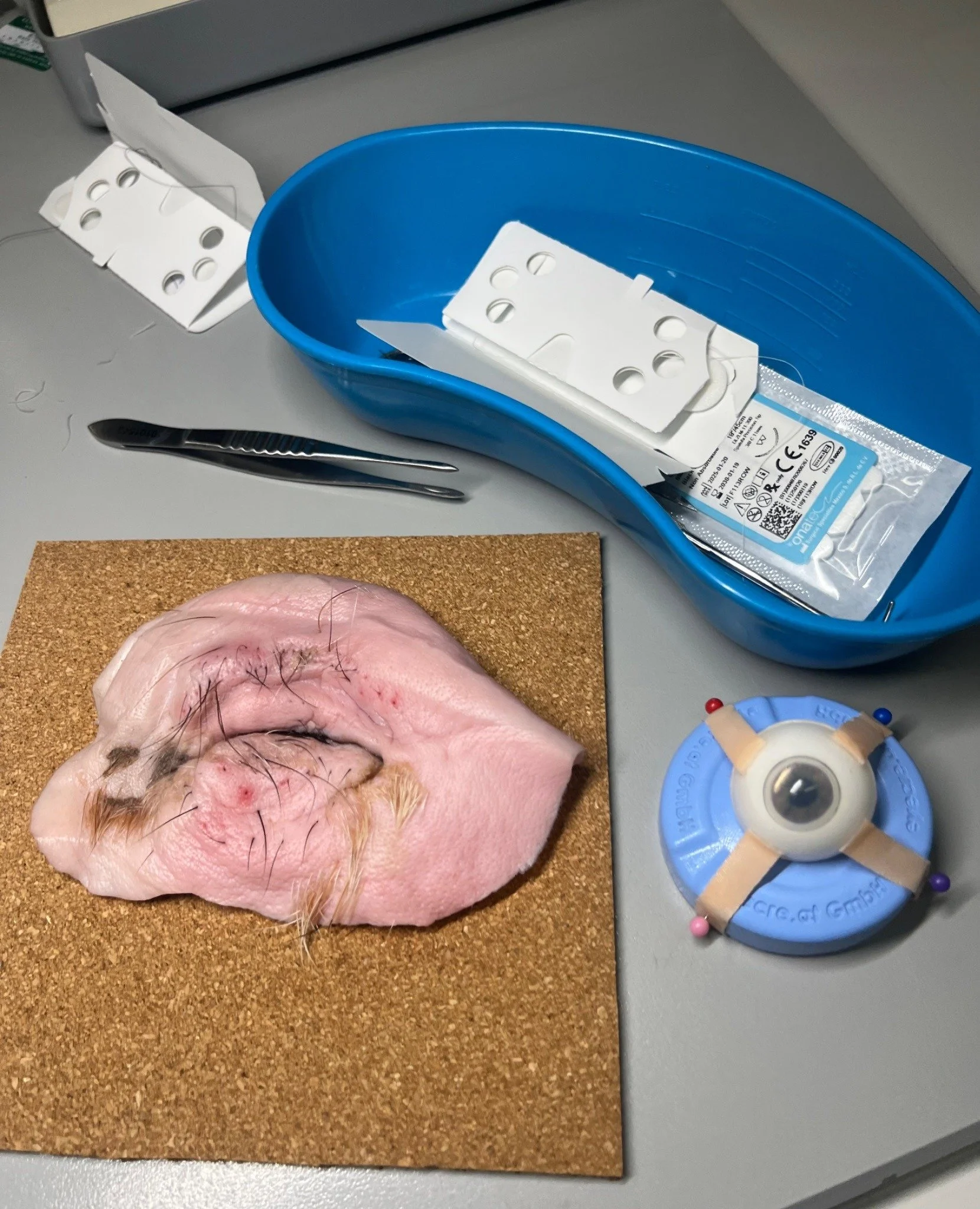
Figure 1: To the left, porcine eyelids used for practicing eyelid laceration repairs; to the right, a model eye with simulated rectus muscle for resection (own image).
The learning curve of the microscope
One of the most challenging aspects for me was adapting to performing tasks under the microscope. Initially, it was difficult to appreciate depth perception, instrument coordination, and spatial orientation within a magnified field. There were several moments where the instinct to look down using direct vision was strong, until I quickly realised that I could barely see the Vicryl which was “thinner than an eyelash”, without magnification. Over the day it felt encouraging to notice an improvement in instrument handling and confidence, but there was a growing appreciation that true competence can only develop through repeated exposure in a clinical environment. At times, I had to remind myself that this was an introductory exposure rather than a skills consolidation course.
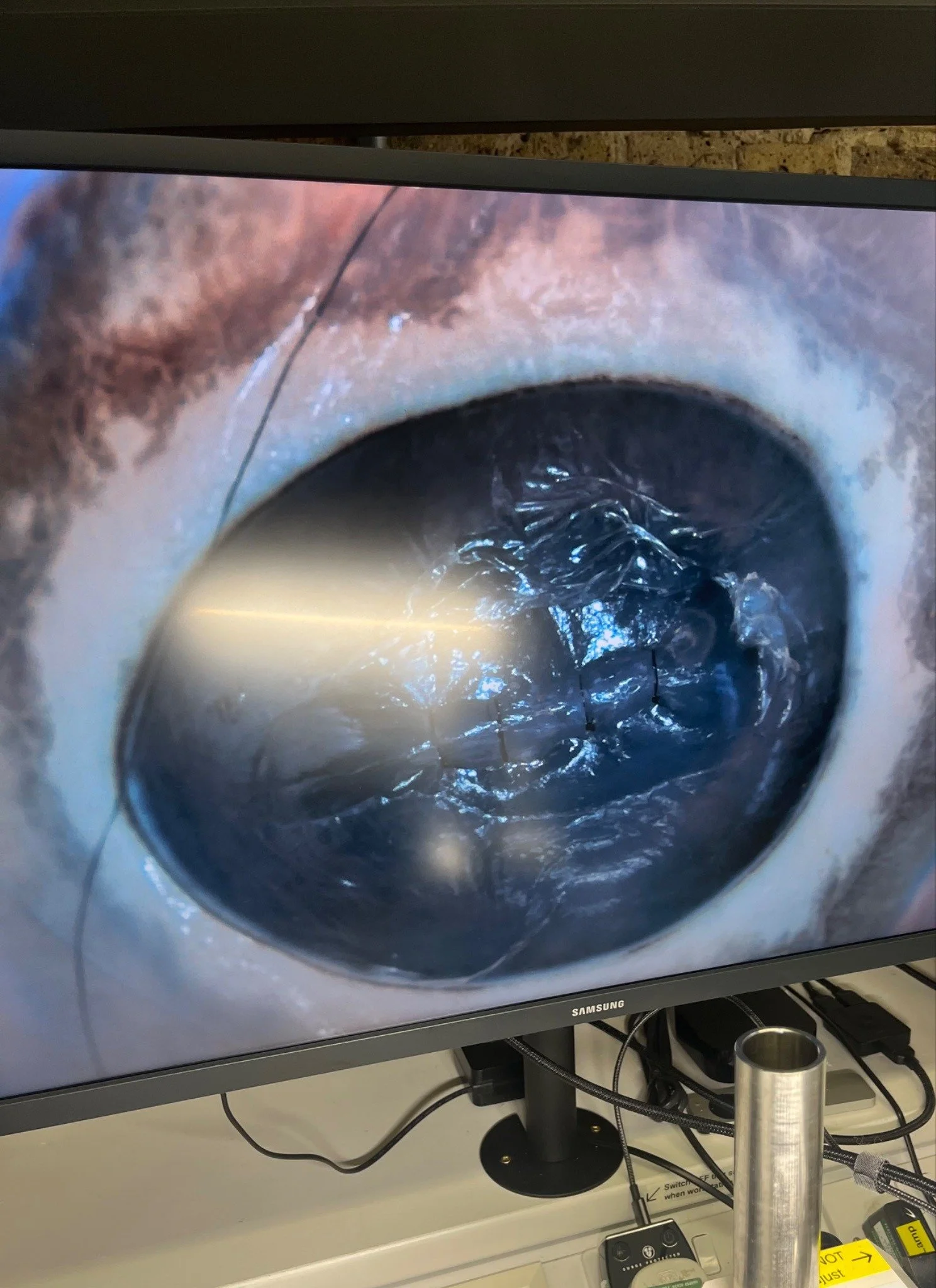
Figure 2: Wet lab practice of corneal suturing on a porcine eye (own image).
A key learning point was recognising that microsurgical skill is not intuitive. It is acquired through deliberate, repetitive practice and adaptation to altered visual feedback. Early frustration highlighted how unfamiliar microsurgery can feel at first exposure. The physical and cognitive demands also became apparent, with fatigue setting in - both mentally and in the hands - by the end of the day.
Philosophical approach to ophthalmic surgery
Beyond the technical skills, educators emphasised a broader philosophy of what it means to be a surgeon. This includes teamwork, communication, respect for equipment and the operating environment, and the importance of lifelong learning and teaching. This was a useful counterbalance to the manual intensity of the day and a reminder that surgical competence extends past technical ability alone.
The value of the course: who should consider it?
This course is particularly valuable for:
Foundation doctors considering ophthalmology
Applicants seeking evidence of commitment to specialty
Trainees with limited prior microsurgical exposure
Those wanting hands-on confirmation of career interest
Its value extends beyond being a portfolio point; it offers a meaningful hands-on exposure to the practical skills and demands of ophthalmic surgery. For me, it highlighted how steep the learning curve of microsurgery is, and most importantly, it reinforced my appreciation for the practical elements of ophthalmology.