Beyond Clinics and Conferences: Creative Extracurricular Ways to Build Ophthalmology Experience
Ophthalmology is a highly competitive specialty, and building a strong portfolio often starts early. While clinical exposure, research, and conferences are important, meaningful engagement with the specialty can — and should — extend beyond traditional pathways. Creative involvement, reflective practice, academic exploration, and community leadership all provide powerful ways to demonstrate genuine commitment. This article explores alternative and impactful extracurricular opportunities that help you develop both professionally and personally within Ophthalmology.
1. Writing and Academic Exploration
Academic curiosity is not limited to publishing research papers. Essay writing and reflective scholarship can be equally powerful.
The Royal College of Ophthalmologists and various medical societies periodically host essay competitions or invite reflective submissions. Even when not directly linked to Ophthalmology, many competitions allow ophthalmic themes.
Examples:
RCOphth Essay Prize for Foundation Doctors - The 2025 title was: "Diabetic eye screening in the UK - evaluate the effectiveness, progress, challenges and future directions.”
Esme’s Umbrella Essay Competition - Focused on Charles Bonnet Syndrome, with entrants asked to critique an AI-generated essay on the condition.
EyeAcademy Essay Competition - The 2025 theme included “AI in Eye Care”.
Writing on Charles Bonnet syndrome, for instance, allows exploration of the interface between Ophthalmology and neurology — demonstrating interdisciplinary thinking. It demonstrates that you understand vision not just as optics and anatomy, but as a complex neurocognitive experience. Understanding national screening programmes, public health policy, and emerging innovations is essential in modern Ophthalmology. As AI becomes increasingly integrated into eye care, strong digital literacy and critical appraisal skills are vital to ensure technology is used safely, ethically, and effectively.
Why this stands out
Shows depth rather than checklist engagement
Demonstrates communication skills
Can sometimes be published in student journals or presented at conferences such as the RCOphth Annual Congress
This engagement does not have to be limited to formal essays. Get into the habit of writing reflective pieces after attending conferences, workshops and local meetings! Regular reflection strengthens your written communication skills, encourages deeper learning, and helps consolidate key insights. It is particularly useful for online events, where portfolio scoring may depend on the level of engagement demonstrated and the quality of reflection on what was learned.
2. Reflective Practice Through Patient-Led Learning
Institutions such as Moorfields Eye Hospital regularly run Patient-as-Teacher Symposiums, offering a unique opportunity to learn directly from individuals living with ophthalmic conditions. Past sessions have included topics such as facial nerve palsy with exposure keratopathy, ocular cutaneous albinism, and keratoconus. These events allow attendees to hear first-hand how the condition affects vision, appearance, daily functioning, and psychological wellbeing — offering depth that cannot be gained from textbooks alone.
A key strength of these symposiums is the opportunity for reflection afterwards. You can write a structured reflection on what you learned, how your perceptions changed, and how the patient narrative influenced your approach to care. Some sessions also invite creative responses — including written reflections (such as poems) or artistic interpretations — which can be submitted for review and potentially presented at a subsequent Moorfields Academy meeting.
Creating a reflection or art piece inspired by these discussions not only consolidates learning but also demonstrates meaningful engagement with patient-centred practice. It transforms attendance into tangible portfolio evidence while reinforcing empathy and professional growth.
Why this stands out
Direct engagement with patient lived experience
Strengthens empathy and understanding beyond textbooks
Encourages meaningful reflection and creative expression
Potential opportunity for presentation at future meetings
For the session on ocular cutaneous albinism, I created a painting (Figure 1) inspired by the patient’s experience of feeling “not seen” or fully understood because her condition did not match common societal expectations about appearance. She shared how people often assumed albinism meant visibly white skin and hair, which did not reflect her lived reality, leading to misunderstanding and misplaced assumptions. My artwork aimed to visually represent this disconnect between perception and identity. The piece was selected as a runner-up, highlighting how creative reflection can meaningfully capture patient narratives and translate them into powerful educational expression.
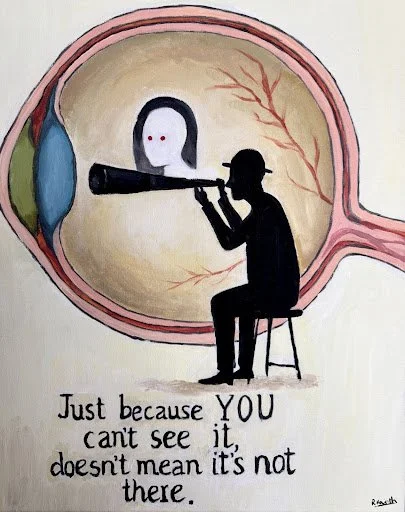
Figure 1- My reflective painting for the patient-as-teacher symposium
3. Leadership, Society Involvement and Community Engagement
Joining or actively contributing to an Ophthalmology society is a strong way to demonstrate sustained interest and leadership. Organising specialty days, running teaching sessions, or setting up interactive workshops — such as stalls demonstrating cataract simulation — helps engage younger year groups and makes the specialty more accessible. Hands-on activities with simulation equipment create meaningful learning experiences and provide a glimpse to the intricacies of ophthalmic surgery.
Collaborating with charities during these events further strengthens impact. For example, during an Ophthalmology specialty day at UCL, we organised a charity quiz to raise funds and awareness for the Royal Society for Blind Children. Integrating fundraising with education highlighted the broader social responsibility of eye care while supporting children and families affected by visual impairment.
These initiatives demonstrate leadership, teamwork, and advocacy — showing commitment to ophthalmology not only in academic settings but also within the wider community.
Building meaningful Ophthalmology experience goes far beyond clinics, audits, and conferences. Engaging in academic writing, reflective practice, patient-centred learning, creative expression, society leadership, and community outreach all demonstrate genuine commitment to the specialty. These activities deepen your understanding of eye disease from both clinical and human perspectives while strengthening communication, leadership, and critical thinking skills.
Ultimately, the most impactful portfolio is not simply one that accumulates points — but one that reflects sustained curiosity, active engagement, and meaningful contribution to the Ophthalmology community.
References
The Royal College of Ophthalmologists. Awards & Prizes Reports. The Royal College of Ophthalmologists. [online] Available at: https://www.rcophth.ac.uk/events-courses/scholarships-awards-prizes/awards-prizes-reports/ [Accessed 28 Feb 2026].
Esme’s Umbrella. Charles Bonnet Syndrome (CBS). Esme’s Umbrella | Charles Bonnet Syndrome UK. [online] Available at:https://www.charlesbonnetsyndrome.uk/ [Accessed 28 Feb 2026].
Severn Deanery.nhs.uk. (2025). Evidence Folder - Severn PGME. [online] Available at:https://www.severndeanery.nhs.uk/recruitment/vacancies/show/oph-2026/evidence-folder-lib [Accessed 28 Feb. 2026].