Preparing for FRCOphth Part 1 as a Foundation Doctor
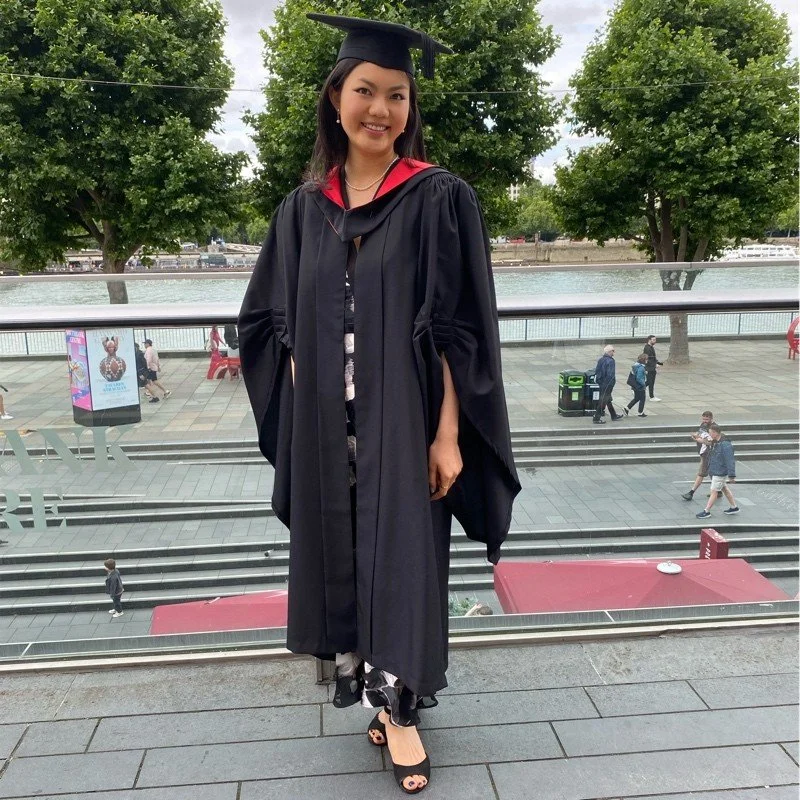
Dr Michele Chan, an Academic FY2 who scored 82% in the FRCOphth Part 1 exam in October 2025 on first attempt, shares her experience for tackling this exam. This guide outlines the high-yield core topics, discusses useful resources and question banks, and finally gives practical key tips about how to prepare for this exam alongside full-time foundation training.
The decision to sit FRCOphth Part 1 during your foundation years might seem daunting, but with the right approach and resources, it is definitely attainable.
Ophthalmology remains one of the most competitive specialties in the UK, and successfully passing Part 1 before formal specialty training demonstrates genuine commitment and adds valuable points to your specialty application portfolio (3 points for passing, and 1 point for attempting the exam).
Here is a comprehensive guide to help you navigate this challenging, but certainly doable, endeavour.
Understanding What Will Come Up
The FRCOphth Part 1 exam consists of 180 MCQs (2 papers of 90 MCQs). Before starting your preparation, it is important to familiarize yourself with the distribution of questions that come up each year to help you allocate your time effectively for revision. This following breakdown was taken from the most recent Examiner’s Reports from the RCOphth website:
Anatomy & Embryology (28 out of 180 MCQs): This section tests detailed knowledge of ocular and orbital anatomy, along with embryological development. The American Association of Ophthalmology (AAO) slide decks are excellent for visualizing anatomical and embryological structures. There are a large number of facts to memorise for this section, and you might find making flashcards useful for consolidation and recall.
Optics (44 out of 180 MCQs): This is the heaviest-weighted section and often the most daunting initially as it is an entirely new topic for most of us coming from medical school. Elkington's Clinical Optics textbook remains the gold standard, although other resources such as the AAO slides and Youtube videos are also helpful (more on resources I used later…). Start learning optics early, focus on understanding the underlying principles rather than memorizing formulas in isolation.
Pathology (34 out of 180 MCQs): Apart from fundamental pathology and histology, a significant proportion of questions require knowledge of microbiology e.g. gram-stains and culture mediums for pathogens. This is a commonly neglected area as it may seem less directly related to clinical ophthalmology, but important to study given the significant proportion of questions on this section in the exam.
Pharmacology & Genetics (14 out of 180 MCQs): This is another section that unfortunately contains a lot of factual information to learn off-by-heart. I found making my own notes for this section helpful by drawing tables on the mechanism of action, indications and side effects for classes of drugs, as well as spider diagrams of inheritance patterns of congenital diseases. It would be impossible to study every single rare genetic condition, but as you start practising with question banks, you will get an idea of which ones tend to appear more frequently than others.
Physiology (17 out of 180 MCQs): Understand ophthalmology-related physiology well, especially topics such as aqueous humour production and flow, corneal and lens metabolism, retinal physiology (phototransduction cascade, dark adaptation, glucose metabolism), and neuro-ophthalmology. Do not forget to go through systemic physiology e.g. cardiovascular, respiratory, renal, and endocrine physiology, as they also feature substantially.
Miscellaneous (29 out of 180 MCQs): A huge part of this section includes study designs and statistics. Ensure you have a good understanding of the advantages and limitations of different types of studies, when certain statistical tests are used (e.g. parametric v.s. non-parametric), and formulae for calculating basic statistics such as sensitivity, specificity, standard deviation (SD), standard error of mean (SEM).
Investigations (14 out of 180 MCQs): After optics, I personally found this section most challenging to prepare for as someone who has not started ophthalmology training because it requires comprehensive understanding of how ophthalmology-specific investigations work, practical points of how they are carried out, and interpretation of results. Examples include electroretinography (ERG), electrooculography (EOG), visual evoked potentials (VEP), fluorescein angiography, optical coherence tomography (OCT) to name a few… If you have a foundation job or a taster week in ophthalmology, exposure to these investigations in the real-world setting would be invaluable. If that is not possible, the YouTube channel ‘Insight Ophthalmology’ has some very helpful video explanations.
Useful Resources
Elkington's Clinical Optics: This should form the backbone of your optics revision. Aim to read through the entire book at least twice. The content can initially seem dense and difficult to grasp, but they become clearer with every additional read.
Nikki Hall's 400 MCQs: This book serves as an excellent starting point. While the questions tend to be more straightforward than what you'll encounter in the actual exam, the detailed answers provide a solid foundation for building your knowledge. Use this early in your revision to identify weak areas and gauge your baseline understanding.
AAO Ophthalmology OKAP Presentations Slides: As mentioned above, I found this immensely helpful for Anatomy and Embryology (the FELT deck in particular). If you have time, their Basic Optics deck was also great, and contained useful quizzes at the end of each topic to test your understanding.
Question Banks:
EyeDocs
Although some content may feel dated (with questions from FRCOphth exams over a decade ago), EyeDocs remains valuable for its question style, which closely mirrors the actual exam format, with very thorough explanations.
eFRCOphth
Formatted similarly to PassMedicine, this platform offers the largest question pool. However, some may find the scope slightly too broad without sufficient depth in core topics. It is worth using if you have time, particularly for its textbook summaries, but may not need to be your primary resource.
Ophthobank
Despite being the most expensive option, I would highly recommend this question bank as the questions were most closely aligned with recent exam content. While it contains fewer questions than other banks, the quality and relevance make it worthwhile, especially during the final stages of revision when you want to focus on high-yield material.
Mr Sohaib Rufai’s MCQs for FRCOphth Part 1
This book contains 450 MCQs weighted across the core topics to reflect the typical breakdown of recent Part 1 exams, with comprehensive explanations and references for recommended reading. As they were separated into 5 ‘practice papers’, I found this incredibly useful in the final stages of revision as official timed mock tests.
Eye Academy
This stands out as an up-to-date question bank with 500+ high-yield questions based on past papers from the last 5 years, written by those who recently sat the exam and passed on their first attempt. The layout of questions and explanations are clear and comprehensive, with a flashcard deck to consolidate your knowledge, performance analytics to track your progress, and a Smart Study mode that targets your weaker areas. It also has a mobile-friendly interface for revision on-the-go, which is perfect when you are preparing for this exam alongside a full-time foundation post!
Final Tips as a Foundation Doctor
Create a study plan: The key to preparing for this exam with a full-time job is time management. Get organised and start early. Block out regular revision slots in your calendar, just as you would clinical commitments. Even 10 minutes a day adds up significantly over months. I started approximately 6 months before the exam, spending roughly 1-2 hours a week initially, then gradually progressing to more intense revision towards the final weeks before the exam.
Utilize downtime: Keep question banks on your phone, and download PDF versions of textbooks, so that you can use them during quieter moments on your shifts or commutes.
Make a study group: If you have friends or colleagues taking the exam, form a study group where you can discuss topics or go through questions together. As you may have experienced from medical school, revision can often be more effective (and bearable!) in groups.
Take care of yourself: Foundation training is already physically and emotionally demanding, adding exam preparation to this requires a conscious effort to protect your wellbeing. Schedule proper rest days where you completely step away from both clinical work and revision, spend quality time with your loved ones, and reserve time for your hobbies and doing things you enjoy. If you are finding it overwhelming, reach out to your education/ clinical supervisors or trusted friends and family for support.
Final Takeaways
FRCOphth Part 1 is undoubtedly tough, but it is fundamentally an achievable examination that can be done alongside foundation training with a structured revision strategy with good-quality resources. Stay consistent with your revision, be kind to yourself, and very best of luck!